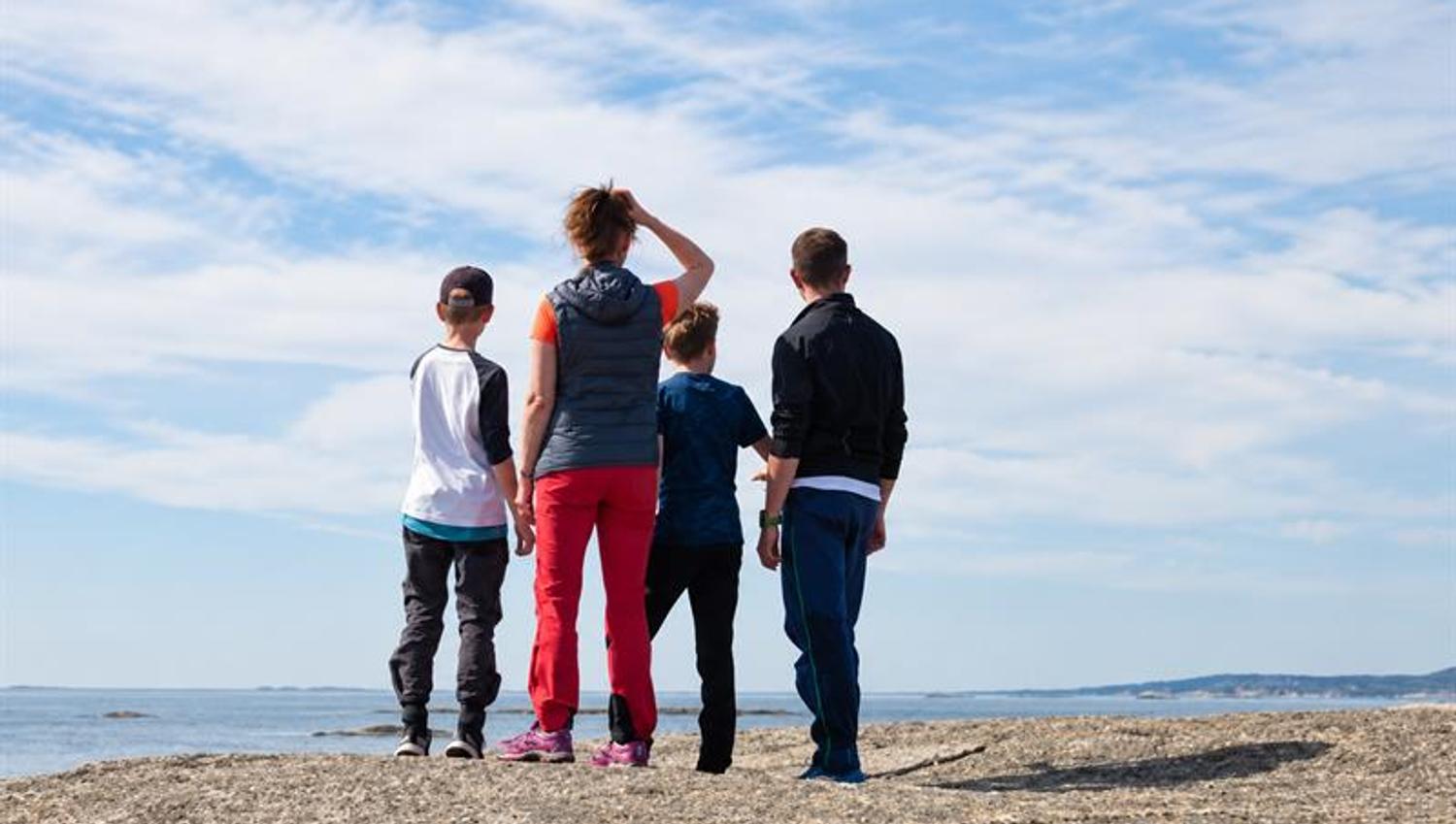
Færder National Park lies in the outer Oslofjord and covers around 340 square kilometres of islands, islets, rocky shores and marine habitats. It stretches from Ormøy in the north to Færder Lighthouse in the south. Walk along the coast, swim in sheltered coves, paddle between islands or discover traces of the people who have lived and worked in the archipelago. You do not need a boat of your own to enjoy the national park. Verdens Ende and Moutmarka on Tjøme are good places to start. For an island trip, head to Bolærne by seasonal passenger boat or private boat.
Start at Verdens Ende
At the southern tip of Tjøme, Verdens Ende has open coastal rocks, small islands and views towards the Skagerrak. Walk around the headland, see the distinctive tipping lighthouse and watch boats passing offshore. Visit Færder National Park Visitor Centre to learn more about the park's wildlife, marine habitats and cultural history through exhibitions and guided activities. The visitor centre has its own opening hours. Verdens Ende is a good choice if you want to experience the archipelago without travelling by boat.
Walk the coastal trail through Moutmarka
Just north of Verdens Ende lies Moutmarka, an open coastal landscape with pebble fields, smooth rocks, grassy slopes and small wooded areas.
The marked Moutmarka coastal trail runs between the Skåebukta area and Mostranda, covering approximately three kilometres one way.
The ground is uneven and the coast can be windy, so bring suitable walking shoes and a windproof jacket. A separate marked circular walk is also available.
Take a boat to the Bolærne islands
Bolærne consists of three main islands and numerous smaller islands off Nøtterøy. Most of the archipelago is within the national park. Østre Bolæren offers a guest harbour, walking trails, swimming spots and former military installations. Mellom Bolæren has mature woodland, old smallholdings and a marked coastal path, while Vestre Bolæren offers maritime heritage and walking opportunities around Jensesund. Seasonal passenger boats operate from Husvik, outside Tønsberg. Always check the departure timetable and return journey before travelling.
Explore the archipelago from the water
Kayaking and boating offer a different way to experience the national park, from sheltered channels and small coves to exposed stretches of open water. Choose a route suited to the weather, wind and your experience. Use a nautical chart and be aware that some islands and nearby waters are closed during the seabird breeding season. Check where you are permitted to travel and land before setting off.
Wildlife above and below the surface
Færder National Park protects important coastal habitats both on land and beneath the sea. Its landscapes include deciduous woodland, coastal pine forest, seashore meadows and traditional farmland. Beneath the water are eelgrass meadows and kelp forests that provide important habitats for fish and other marine life. Several islands are important seabird nesting areas. You may spot birds along the coast, but keep your distance and avoid disturbing them, especially during spring and summer.
The archipelago's cultural heritage
The national park also tells the story of generations of coastal life. Stone walls, former smallholdings, burial cairns, lighthouses and military remains can be found across the islands. On Bolærne, you can explore traces of farming, seafaring and military history. Elsewhere, grazing and traditional land management have helped shape the open landscape. Some islands still have grazing sheep and cattle. Close gates behind you and give animals plenty of space.
Help protect the national park
There is plenty to explore in Færder National Park, but some areas need extra protection. In designated seabird protection areas, landing and access within 50 metres of the shore are prohibited from 15 April to 15 July. This also applies when kayaking or travelling by boat. Dogs must be kept on a lead from 1 April to 15 October, and all year round in seabird protection areas. Camping is not permitted everywhere. Campfires are only allowed at designated fire sites or on vegetation-free loose surfaces, and fires and barbecues must never damage coastal rocks or vegetation. Barbecues must not be placed directly on the ground. Jet skis and drones are prohibited in the national park. Check current regulations and maps before visiting, especially if you plan to camp, kayak or visit islands during the bird nesting season. Follow designated trails where available, and take all your litter home.
Check the official regulations and maps before travelling, especially if you plan to camp, paddle or visit islands during the nesting season. Use established paths where available and take all litter home.